The AI Morning Brief: How Small Business Owners Can Start the Day Already Caught Up
Start the day with clarity, not chaos. An AI Morning Brief helps small business owners organize emails, schedules, follow-ups, money items, and top priorities before the day gets away from them.

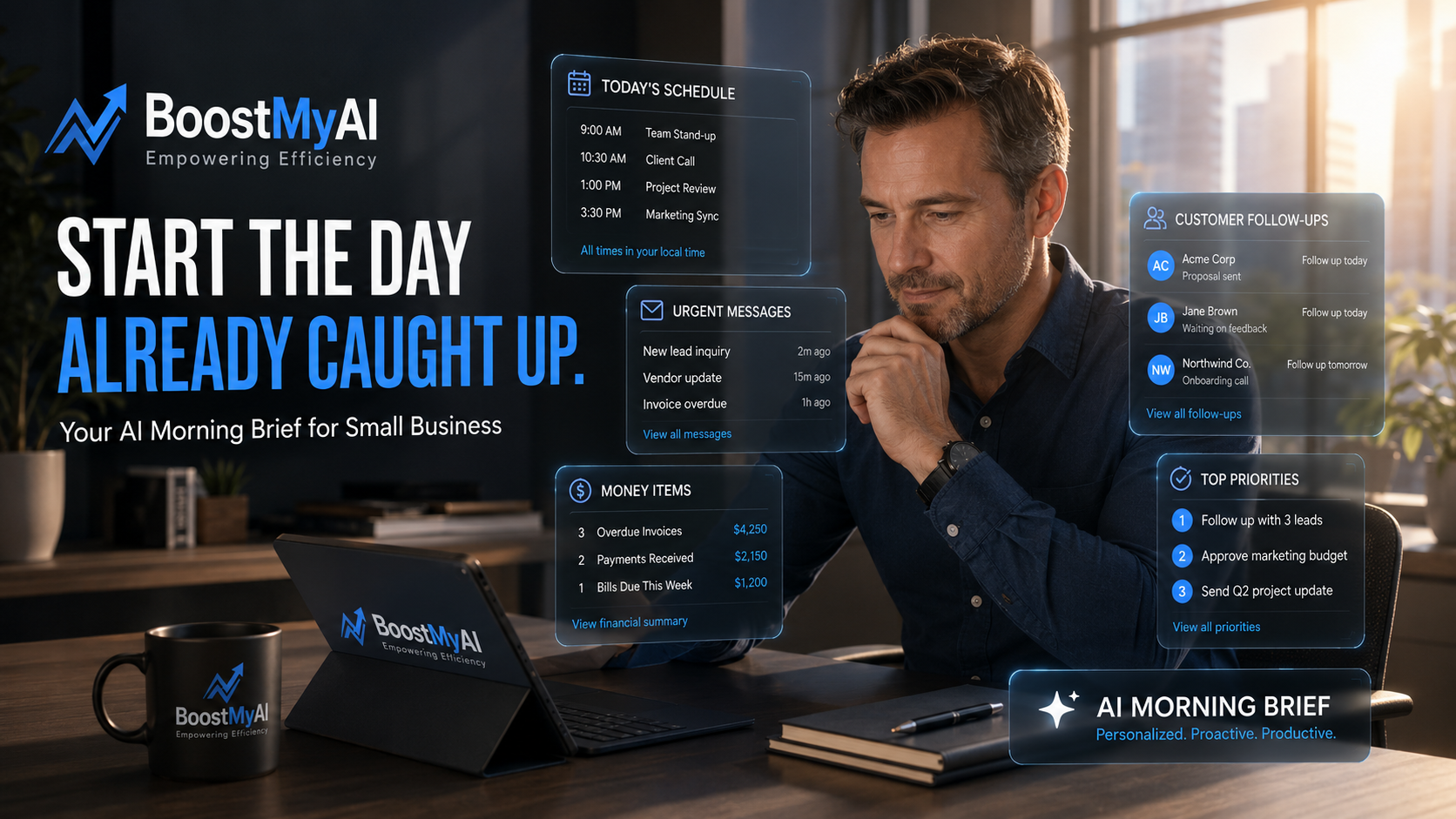
Most small business owners start the day already behind.
Before the first cup of coffee is finished, there are emails to answer, appointments to remember, invoices to check, employees to follow up with, customers waiting on responses, and problems that somehow appeared overnight.
That is the normal routine.
But it does not have to stay that way.
One of the most practical ways a small business can use AI is by creating a daily AI Morning Brief — a short, organized summary of what needs attention before the day gets out of control.
This is not complicated. It is not futuristic. It is simply using AI to gather the information you already have and turn it into a clear daily action plan.
The Problem: Business Owners Are Drowning in Scattered Information
Most small businesses do not suffer from a lack of information.
They suffer from information being scattered everywhere.
Important updates may be hiding in:
- Emails
- Text messages
- Calendar invites
- Voicemails
- CRM notes
- Invoices
- Spreadsheets
- Employee messages
- Customer requests
- Vendor follow-ups
- Meeting notes
The owner or manager is expected to remember all of it.
That is where things start slipping.
A customer does not get called back. A quote does not get sent. A payment issue goes unnoticed. A meeting is missed. An employee question gets buried. A small problem becomes a bigger one because nobody saw it early enough.
AI can help by pulling those scattered pieces together into one simple briefing.
What Is an AI Morning Brief?
An AI Morning Brief is a daily summary that tells you what matters most before your day starts.
It can include:
- Today’s meetings
- Urgent emails
- Missed follow-ups
- Customer issues
- Open invoices
- Sales opportunities
- Employee schedule concerns
- Pending tasks
- Deadlines
- Notes from yesterday
- Suggested priorities for today
Think of it like having an assistant walk into your office every morning and say:
“Here is what happened, here is what needs your attention, and here is what you should do first.”
That is the kind of AI that small businesses can actually use.
Why This Matters
A lot of people talk about AI like it has to be some massive automation system.
It does not.
Sometimes the biggest win is simply starting the day with a clear head.
An AI Morning Brief helps a business owner:
- Stop digging through emails first thing in the morning
- See urgent issues faster
- Prioritize the right work
- Avoid missed customer follow-ups
- Keep track of employee or vendor issues
- Reduce mental clutter
- Make better decisions earlier in the day
The goal is not to let AI run the business.
The goal is to help the owner run the business with better visibility.
What Should Be Included in the Brief?
Every business is different, but a good AI Morning Brief should be short, useful, and action-focused.
A strong format could look like this:
1. Today’s Schedule
This section gives a quick look at the day ahead.
It should include:
- Meetings
- Appointments
- Client calls
- Site visits
- Deadlines
- Personal reminders if needed
This helps the owner see the shape of the day before getting pulled into distractions.
2. Urgent Messages
This section highlights emails or messages that need quick attention.
AI can help identify:
- Angry customers
- Unanswered questions
- Time-sensitive requests
- Vendor issues
- Employee concerns
- Missed replies
- Messages from key clients
Instead of scrolling through a crowded inbox, the owner sees what matters first.
3. Customer Follow-Ups
Most businesses lose money when follow-up gets weak.
This section can show:
- Customers waiting on a response
- Quotes that need to be sent
- Proposals that need a follow-up
- Recent buyers who should be thanked
- Complaints that need resolution
- Leads that have gone quiet
A simple daily follow-up list can protect revenue.
4. Money Items
Cash flow matters.
An AI Morning Brief can flag financial items such as:
- Past-due invoices
- Large payments expected
- Upcoming bills
- Unusual expenses
- Missing payment confirmations
- Quotes waiting for approval
- Customers who need billing follow-up
This does not replace accounting. It simply helps the owner keep important money issues visible.
5. Employee or Operations Issues
For businesses with employees, AI can help surface people and operations concerns.
This may include:
- Schedule gaps
- Overtime risks
- Call-offs
- Pending time-off requests
- Training reminders
- Unanswered employee questions
- Performance notes from the previous day
- Open tasks assigned to managers or staff
These are the kinds of things that become fires when they are ignored.
6. Top Priorities for the Day
This may be the most important part.
After reviewing everything, AI can suggest a short priority list.
For example:
- Call back the unhappy customer before 10:00 AM
- Send the revised proposal to the new lead
- Review two past-due invoices
- Confirm tomorrow’s staffing coverage
- Follow up with the vendor about delayed materials
This turns information into action.
That is where AI becomes valuable.
The Key: Keep It Short
The biggest mistake is making the AI Morning Brief too long.
A good brief should not be a report nobody reads.
It should be simple enough to review in five minutes.
The best format is:
- What needs attention
- Why it matters
- What action should be taken
- Who owns it
- When it is due
That is it.
No fluff. No long paragraphs. No unnecessary detail.
Business owners do not need more reading. They need clarity.
How to Start Without Overcomplicating It
A small business can start with a simple prompt.
Example:
“Review my notes, emails, calendar, and task list. Create a morning briefing for today. Include urgent items, customer follow-ups, money issues, employee or operations concerns, and the top five priorities I should handle first.”
Even if the business starts manually by copying information into ChatGPT, Gemini, or Copilot, the habit itself is valuable.
Over time, the process can become more automated by connecting tools such as:
- Calendar
- CRM
- Task management software
- Accounting software
- Scheduling platforms
- Shared documents
Start simple. Prove the value. Then automate more.
Where This Helps Most
An AI Morning Brief can help almost any small business, but it is especially useful for owners and managers who deal with a lot of moving parts.
That includes:
- Service businesses
- Security companies
- Contractors
- Medical offices
- Real estate teams
- Restaurants and bars
- Staffing companies
- Home service providers
- Consultants
- Retail businesses
- Sales teams
Any business with customers, employees, schedules, invoices, and follow-ups can benefit.
AI Does Not Replace Discipline
This is important.
An AI Morning Brief does not fix a business that refuses to follow up, document work, or hold people accountable.
AI is not a substitute for discipline.
But it can support discipline.
It can remind you what needs to happen. It can organize the mess. It can point out what got missed. It can help a busy owner stay focused on the right work instead of reacting to whatever is loudest.
That is a real advantage.
The Bottom Line
Small business owners do not need more noise.
They need better visibility.
An AI Morning Brief gives owners and managers a practical way to start the day with control instead of chaos. It organizes scattered information, highlights what matters, and turns daily confusion into a clear action plan.
That is not flashy.
It is useful.
And in business, useful wins.
Contact Us
Want to build an AI Morning Brief for your business? Book a 15-minute consult, contact us today!