How to Use AI to Catch Scope Creep Before It Eats Your Profit
Small favors and extra customer requests can quietly eat into your profits. Discover how AI can identify expanding workloads, uncover hidden labor costs, and help small businesses protect their bottom line.

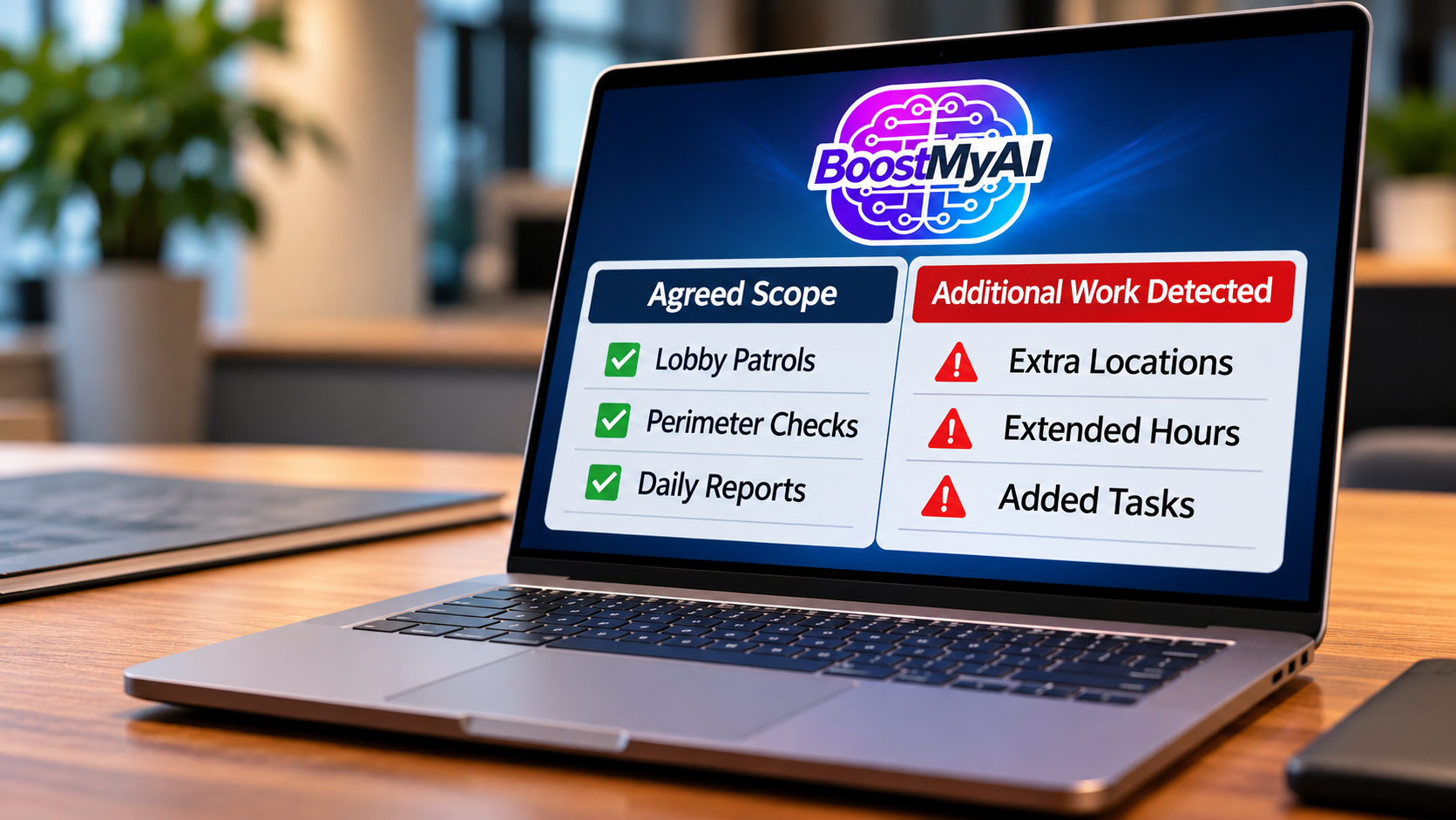
It usually starts with a reasonable request. Could your team cover one more area? Stay a little later? Add another report? You say yes because taking care of customers is part of running a good business. A few months later, those small favors have become part of the job, your employees are doing more work, and your customer is still paying the original price. Your payroll has noticed, even if your invoice hasn’t.
That is scope creep: the work expands while the agreed scope and price stay put. For a small service business, the challenge is recognizing when an occasional favor has become a recurring expectation. AI can help you organize the evidence for that conversation.
Compare What You Promised With What You Deliver
AI tools with document analysis can help summarize commitments and compare information across files. Microsoft’s guidance, for example, describes comparing documents with Copilot and extracting scope and deliverables from statements of work. One practical application is to use those capabilities to prepare a comparison of what your business agreed to provide and what its service records show it is actually providing.
Start with the current agreement, approved changes, recent work orders or activity reports, and invoices. Ask AI to identify possible differences: additional locations, longer service hours, more frequent visits, or recurring tasks that do not clearly appear in the approved scope. Require supporting records for each finding and an explanation of anything that remains unclear.
See What Those Little Extras Cost
Consider a hypothetical cleaning company whose customer adds another breakroom to the daily routine. The additional work takes 30 total labor minutes each weekday. If it continues five days a week for 52 weeks, that is 130 labor hours annually. At an assumed total labor cost of $25 per hour, the estimated annual labor cost associated with that extra work is $3,250 for one account.
That calculation gives the owner something concrete to investigate. Perhaps the extra area was covered by an approved change. Perhaps the company deliberately included it as a courtesy. Perhaps the workload has grown enough to justify a discussion about future pricing. The useful result is a clearer view of the work and its cost.
Start With One Customer and One Month
Choose an account where your team believes the workload has grown. Supply the relevant documents in an AI workspace your business has approved for that information. For this first review, you can provide the files manually; ongoing monitoring would require a repeatable process and any necessary system connections.
A useful starting prompt is:
Compare this customer’s current service agreement and approved changes with the last 30 days of activity records and invoices. Identify work that may exceed the agreed scope or may need a billing review. Create a table showing the work performed, the relevant scope provision, supporting records, frequency, and questions for the manager. Cite the exact document and section or record for each finding. Mark ambiguous items “unclear—needs review.” Do not invent missing hours, rates, approvals, or an entitlement to charge.
Have the account manager check that table against the original records and their knowledge of the customer. A flagged difference might reflect incomplete documentation, work already included in the price, or an intentional courtesy. Confirm the facts before discussing changes or charges.
Then make a deliberate decision: continue the courtesy, adjust how the work is performed, or agree on a revised scope and price with the customer. Record the decision so the next review starts from an accurate baseline. Track confirmed changes and the resulting costs or revenue to see whether the process is worth continuing.
Put AI to Work on Your Bottom Line
At BoostMyAI, we help small businesses identify practical ways to use AI around the work they already do. That can include selecting the right tools, designing a review process, and training employees to turn the results into useful business decisions.
If your team keeps doing “just one more thing,” it may be time to see what those extras add up to. Contact us today to explore how AI can help you spot expanding workloads, improve efficiency, and protect your profit.