How to Integrate AI Biometrics Safely and Ethically
Stay compliant in 2026! Learn how to integrate AI biometrics using Edge Processing and automated data-purging. Protect your business from legal backlash while offering elite "Face-as-a-Badge" security.

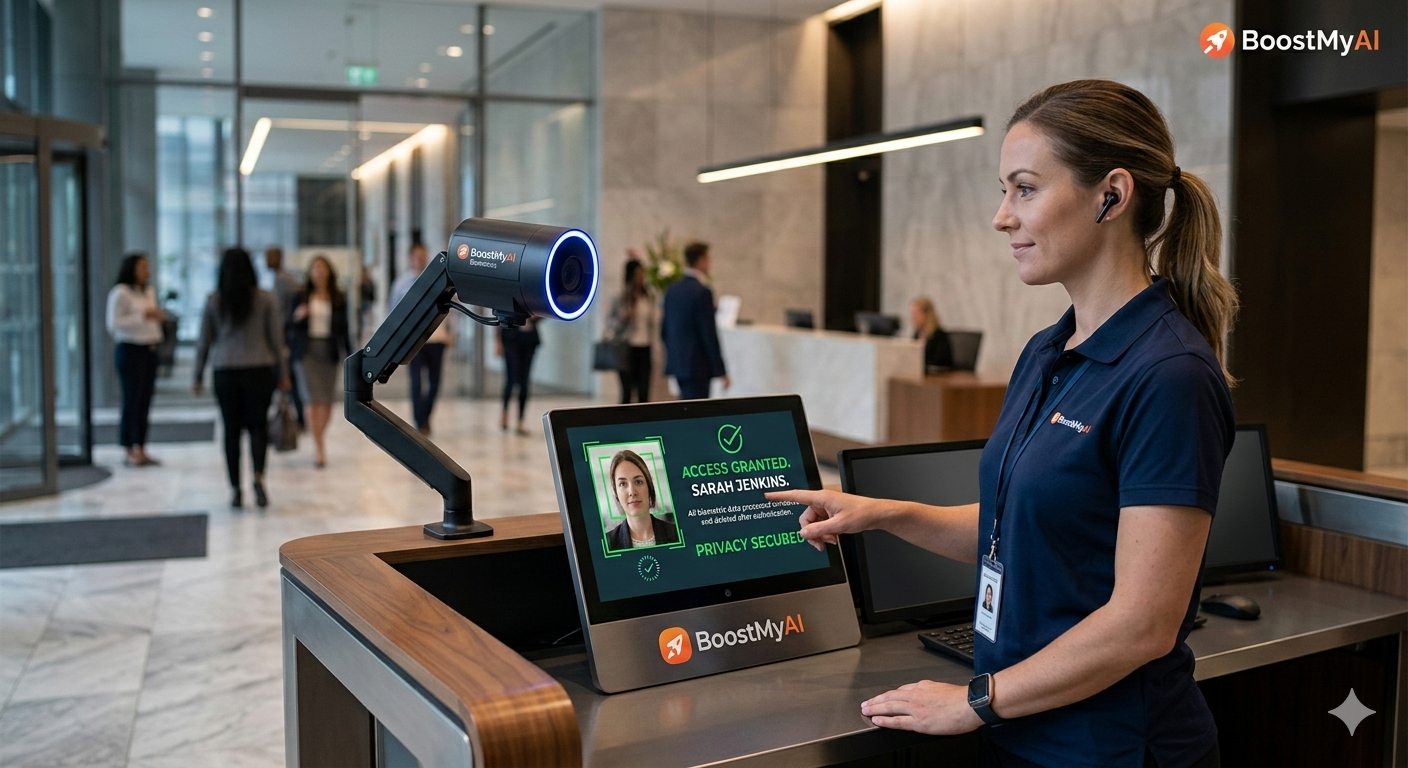
The world of biometric AI, including facial recognition and behavioral analysis, offers unparalleled opportunities for efficiency, security, and a enhanced customer experience. For security firms and companies using these technologies, it’s like having a digital fingerprint for access control, an automated eye on unusual activity, and a streamlined way to provide high-end, personalized service.
However, the rapid advancement of these technologies has also raised significant privacy and ethical concerns, leading to a complex and evolving landscape of regulations. The 2026 updates to major AI privacy laws, such as the EU AI Act and state-specific laws across the US, have made compliance not just an ethical obligation, but a business imperative. Ignoring these regulations can lead to severe legal backlash, including massive fines and irreversible damage to a company's reputation.
This article is your guide to navigating this complex terrain. We'll show you how to integrate AI biometrics in a "Privacy-First" manner, focusing on key technologies like Edge Processing and Automated Data-Purging, to ensure compliance with 2026 standards.
The Problem: When Security Meets the Law
For security firms, the promise of facial recognition for "Face-as-a-Badge" access control or behavior analysis to identify potential threats is undeniable. These tools can increase the efficiency of security operations, reduce human error, and provide a seamless experience for clients and employees.
But the data powering these AI models—facial features, gate, voice—is highly personal. Traditional approaches to biometric data often involved storing vast amounts of sensitive information, creating a massive security risk and a prime target for litigious action. The new regulations, with their emphasis on data minimization and explicit consent, are designed to curb these risks.
The central challenge is clear: How do you reap the benefits of AI biometrics without creating a liability nightmare? The answer lies in shifting your approach to a "Privacy-First AI" framework.
The "How-To": Your Checklist for Privacy-First AI Biometrics
To stay compliant with 2026 standards, you need a proactive and integrated strategy. Here is a checklist of essential steps:
1. Prioritize Edge Processing
This is perhaps the single most significant architectural decision for compliant biometric AI.
The Traditional Model (The Liability Model): Biometric data (e.g., a face image) is captured by a camera and sent to a central server. The analysis is done on the server, and the data is stored there, often for a long time. This creates a massive, vulnerable database.
The Edge Processing Model (The Compliance Model): The camera itself has the processing power to analyze the biometric data. The raw image is processed on the device, converted into an anonymous mathematical representation (a "template"), and then immediately deleted. Only the anonymous template is sent for authentication or analysis.
Why this matters: If a data breach occurs at the central server, the hackers find only a list of abstract mathematical numbers, not face images or identities. For many regulations, this "de-identification" at the source is a major compliance advantage.
2. Implement Automated Data-Purging Protocols
Storing biometric data for any longer than necessary is a major compliance risk. Implement automated protocols to purge data according to clear, regulatory-mandated schedules.
The How-To:
- Set retention limits: For example, a successful "Face-as-a-Badge" verification could trigger the immediate deletion of the facial template from the authentication server after access is granted.
- Define "ephemeral data": For behavior analysis, the raw video feed can be processed and then deleted within seconds or minutes. Only metadata (e.g., "unusual activity detected at 10:05 PM in Zone 3") is stored.
- Build in data lifecycle management: Your system should have automated, auditable procedures to find and delete data that has reached its end-of-life.
3. Establish Clear Consent and Transparency
A "Privacy-First" approach is fundamentally about respect for individuals. Consent and transparency are non-negotiable under 2026 laws.
The How-To:
- Explicit, opt-in consent: You must obtain clear, informed consent from individuals before collecting and processing their biometric data. This consent must be specific to the purpose (e.g., "I consent to use facial recognition for access control to this building").
- Transparent privacy policies: Your privacy policy must clearly state what biometric data is being collected, how it's being used, who it's shared with, and how long it's stored.
- Easy mechanisms to withdraw consent: Individuals must be able to easily withdraw their consent, which should trigger the prompt deletion of their biometric data.
4. Conduct Regular Fairness and Bias Audits
Ethical AI goes beyond legal compliance; it’s about ensuring fairness and preventing discrimination. Biometric AI models can have inherent biases, leading to inaccurate results for certain groups of people.
The How-To:
- Test for bias: Regularly audit your AI models with diverse datasets to identify and mitigate any demographic bias.
- Use high-quality, representative data: Ensure the data used to train and test your models is diverse and representative of the populations they will be used with.
- Monitor in-production performance: Continuously monitor your biometric AI systems to detect and correct any emerging bias or unfairness.
The Bottom Line: Compliance as a Competitive Advantage
Integrating AI biometrics safely and ethically isn't just a legal requirement; it's a strategic differentiator. By adopting a "Privacy-First" framework, your company is not just mitigating risk, but building a foundation for sustainable, high-value growth.
- Enhanced Client Trust: For high-end clients, security and privacy are paramount. Proactively demonstrating your commitment to ethical AI biometrics makes your firm a trusted and desirable partner.
- Increased Efficiency and Reduced Costs: By adopting technologies like Edge Processing and Automated Data-Purging, you reduce the cost and complexity of data management and storage, leading to long-term efficiency gains.
- Sustainable Innovation: Building your AI solutions on a foundation of compliance and ethics creates a stable and predictable environment for future innovation, avoiding the disruption and cost of reactive, costly retrofits to meet new regulations.
At BoostMyAI, we understand the complex interplay of innovation and compliance. We help businesses integrate powerful AI technologies like biometric systems in a way that maximizes efficiency and growth while adhering to the highest ethical and legal standards. Ready to explore how "Privacy-First AI" can transform your business? Contact us today to discuss your vision.
Contact us today to get started!